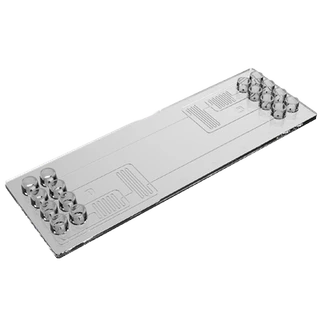
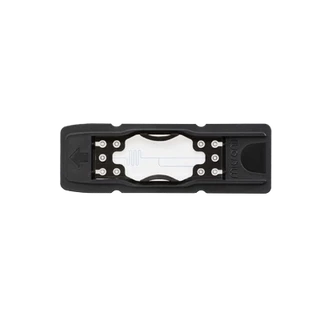
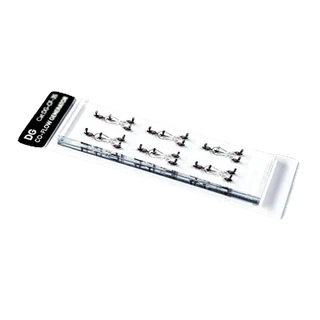
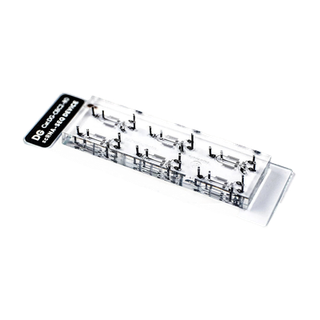
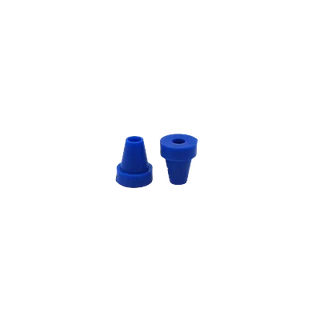
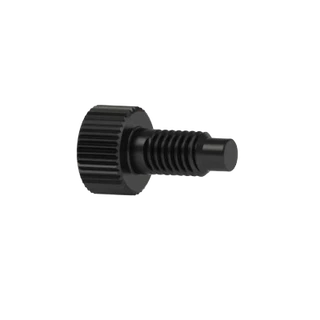
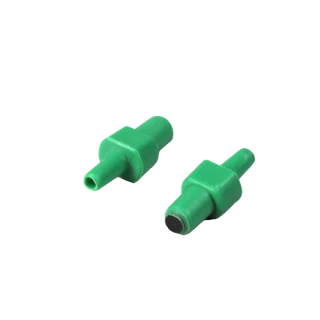
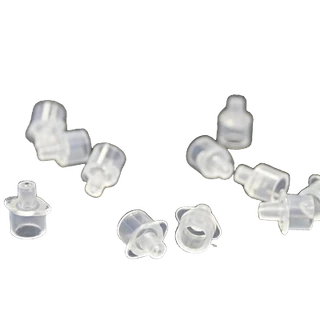
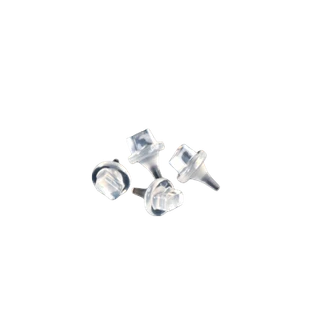
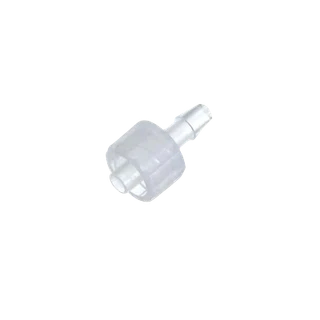
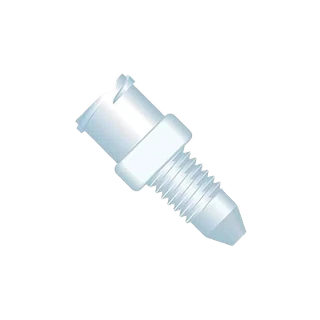
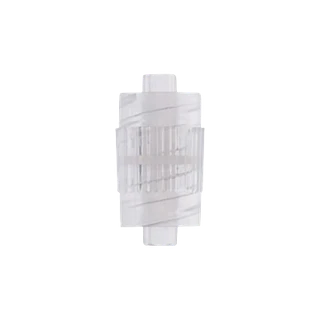
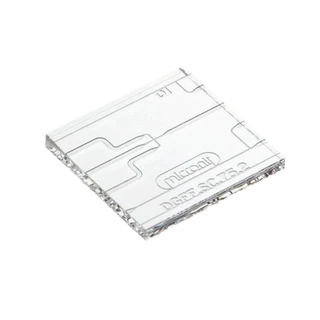
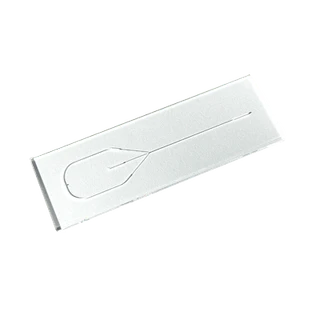
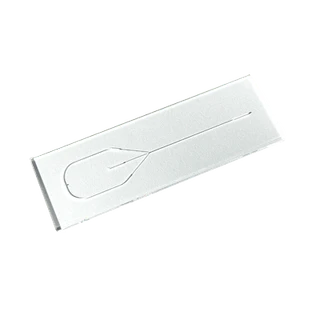
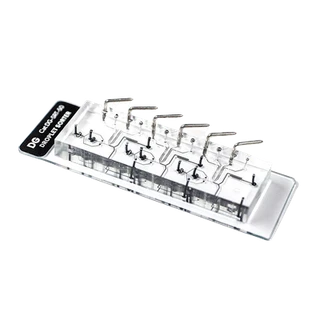
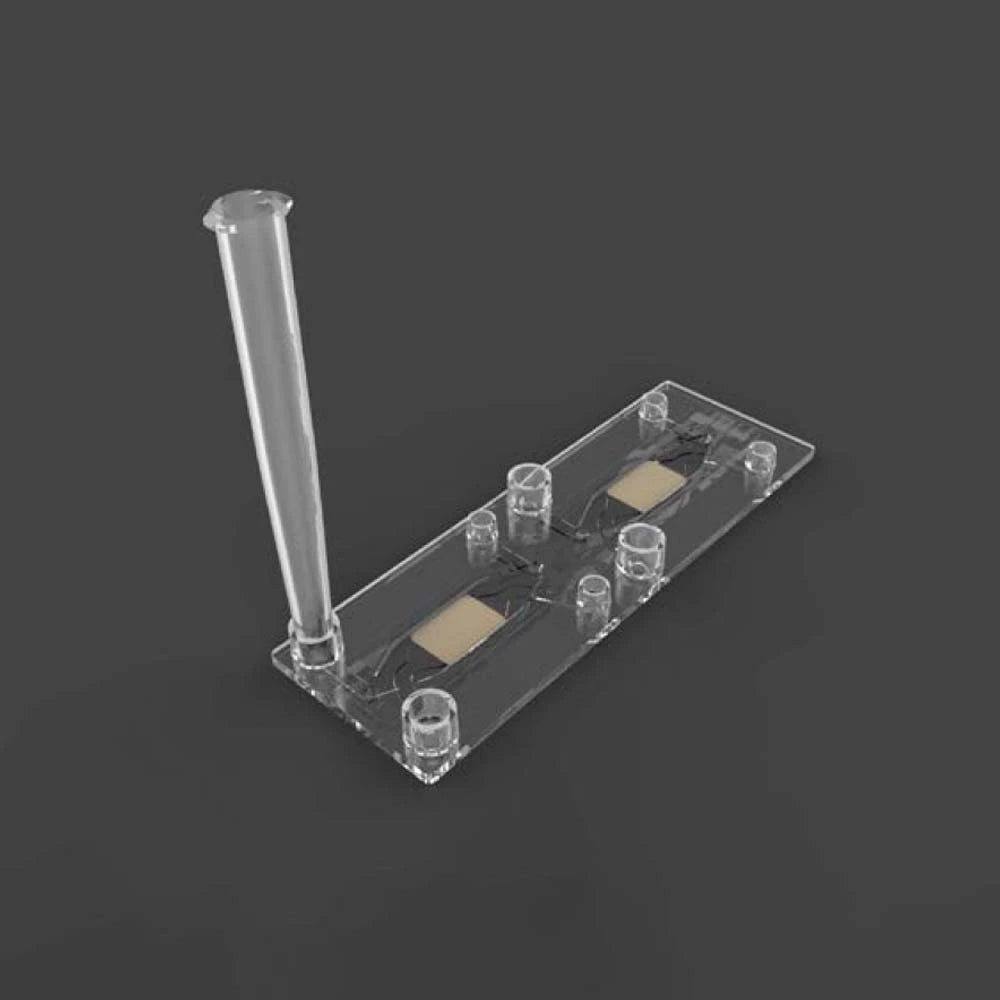
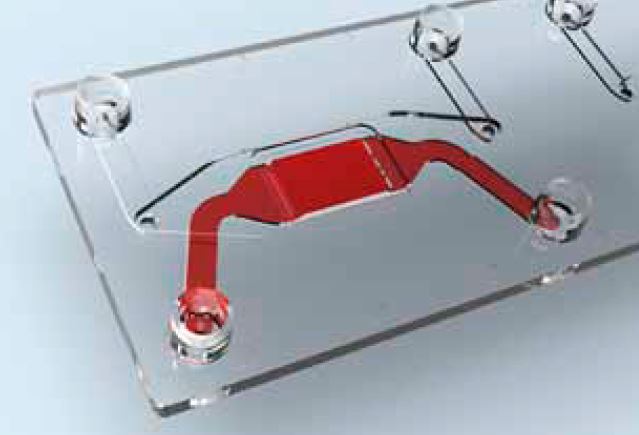
The Cross-Flow Membrane Chip - With Luer and Mini Luer interfaces Fluidic 568 is a microfluidic chip designed for parallel co-culture experiments with two independent chambers separated by a permeable 8 μm pore PET membrane. The device allows precise volume separation and selection for the two fluidic channels, enabling controlled cell seeding and exchange. With its dual Luer and Mini Luer interface on inlets and outlets per channel, users can connect compatible syringes and tubing for easy and flexible operation, supporting workflows that demand flexible volume management, channel independence, and robust experimental integrity.
General
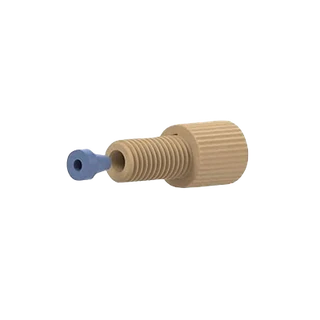
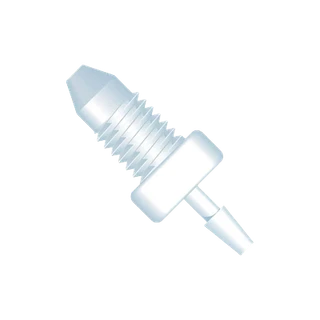
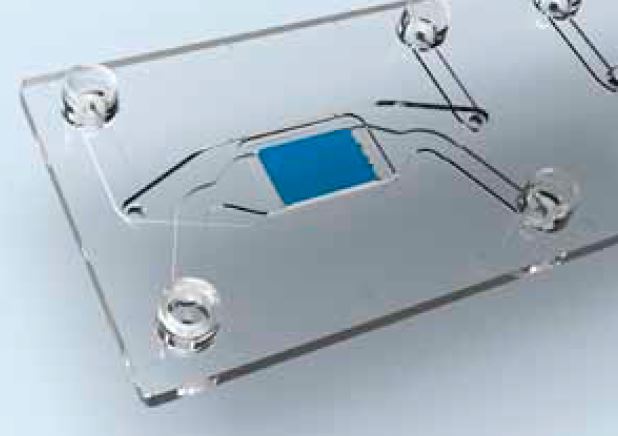
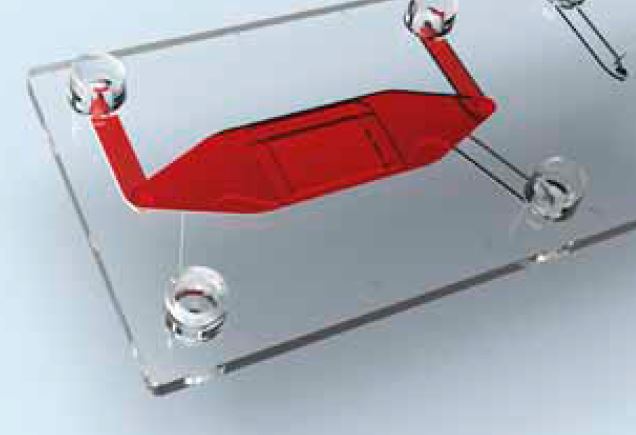
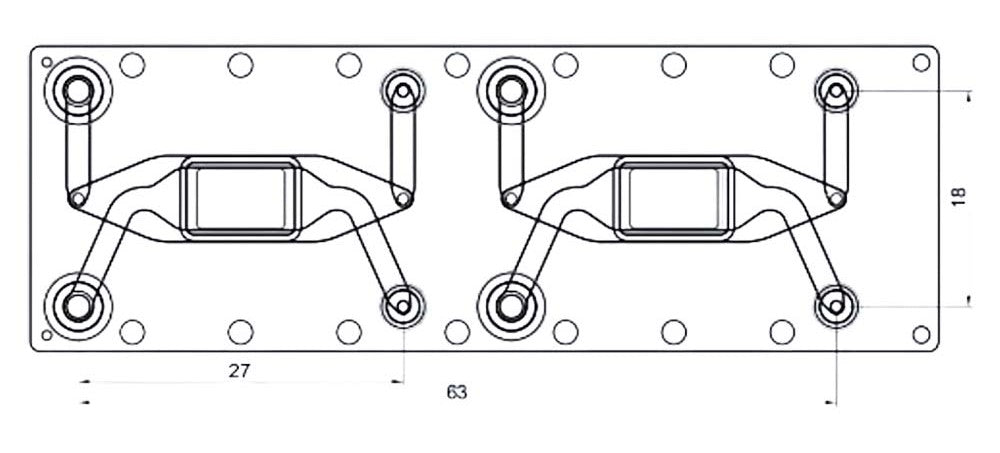
The cross-flow membrane chip Fluidic 568 possesses two independent chambers, which interact through a permeable membrane. Each chamber features one inlet and one outlet with Luer and Mini Luer interfaces. The Luer interfaces can be accessed with Luer syringes to seed cells into the chamber. Fluidic 568 can be used e.g. for cell culture experiments, where cells, such as epithelial cells are co-cultured. The off-the-shelf chip features a membrane with 8 μm pores. However, customized membrane integration can be realized. Please contact us for feasibility and pricing via inquiries@microlfuidic-ChipShop.com.
Features & Benefits
- Independent dual chambers: The two separate chambers are divided by a membrane and allow for parallel experiments or different conditions during one experiment.
- Flexible connectivity: Luer and Mini Luer interfaces allow users to work with various syringes and tubing easily for sample introduction and extraction.
- Customizable membrane options: The standard 8 μm pore PET membrane can be replaced with custom membrane integrations upon request for specific permeability needs.
- Transparent materials: The chip is made from transparent polymers, enabling easy visual inspection and microscopy compatibility during experiments.
- Surface treatment choices: Options for hydrophilized or untreated surfaces support a range of cell culture and fluidic applications, adapting the chip to your workflow.
The Cross-Flow Membrane Chip - Fluidic 568 is designed for experiments where interaction through a membrane is necessary, such as co-culture of different cell types. The dual interface system supports a straightforward workflow, whether you use standard Luer or smaller Mini Luer components. All fluid contact materials are optically clear for optimal visualization, providing reliability for researchers conducting biological assays, permeability studies, or cell biology protocols.
Available with different materials and surface treatments, the chip is adaptable for both routine and advanced laboratory procedures. Each unit is ready to use, and the chip can be further customized by integrating different membranes upon request. This flexibility ensures that the product meets diverse needs in research and industrial laboratories.
Applications
This chip is ideal for dual-channel microfluidic experiments that require cell seeding, culturing, or chemical exchange separated by a defined membrane barrier.
- Co-culture of cell types, including epithelial and other adherent cells
- Drug permeability and barrier function assays
- Cell migration or transport studies
Applications and examples from published papers
The upper and the lower compartments are separated by the porous membrane, and they can be perfused with different culture media. A tissue interface can be created to mimic alveolar, stomach, intestine, kidney, liver, brain-blood, skin functions, etc. Tissues inside the chip can be easily observed by microscopy.
Cell culture is just one potential application area of this versatile chip. The design indeed allows other different experiments such as small molecule transfer measurements, on-chip dialysis, and many more.
Intestine-on-chip
Maurer M. et al., A three-dimensional immunocompetent intestine-on-chip model as in vitro platform for functional and microbial interaction studies, Biomaterials 2019 (Download)
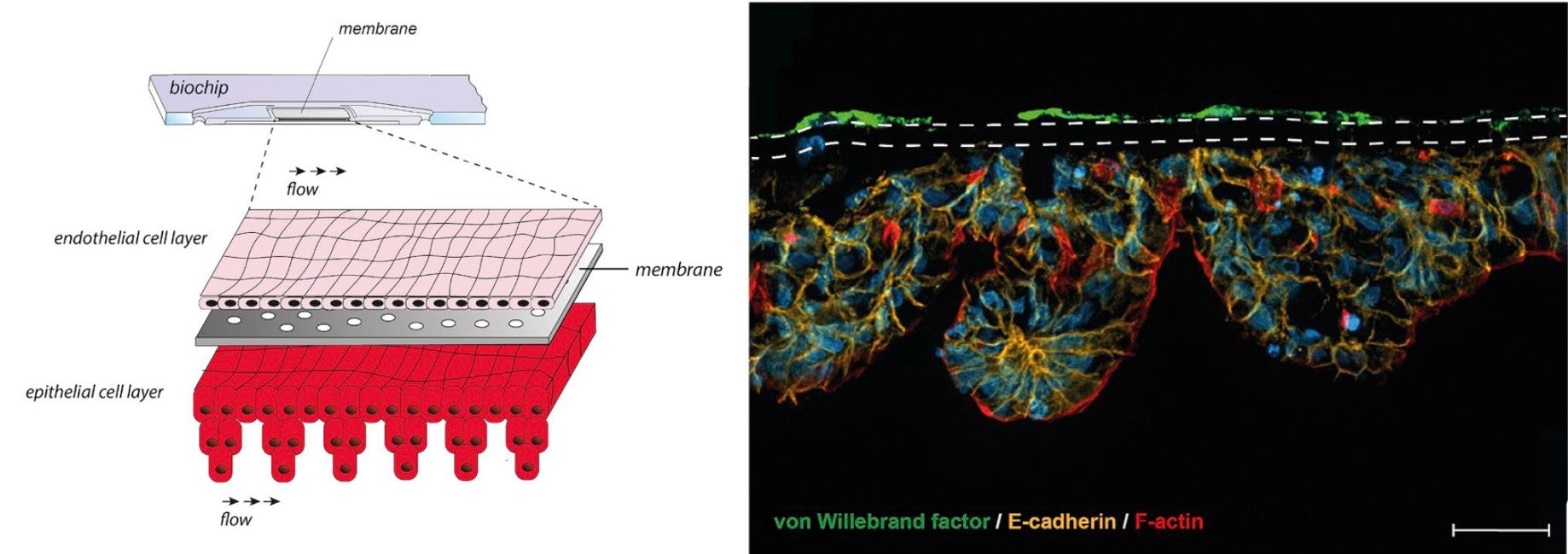
3D microphysiological model of the human intestine.
In this work, the model displays the physiological immune tolerance of the intestinal lumen to microbial-associated molecular patterns and can, therefore, be colonized with living microorganisms. The authors demonstrate that microbial interactions can be efficiently investigated using this chip creating a more physiological and immunocompetent microenvironment.
Endothelial Barrier-on-chip
Raasch M. et al., Microfluidically supported biochip design for culture of endothelial cell layers with improved perfusion conditions, Biofabrication 2015, 7: 015013 (Download)
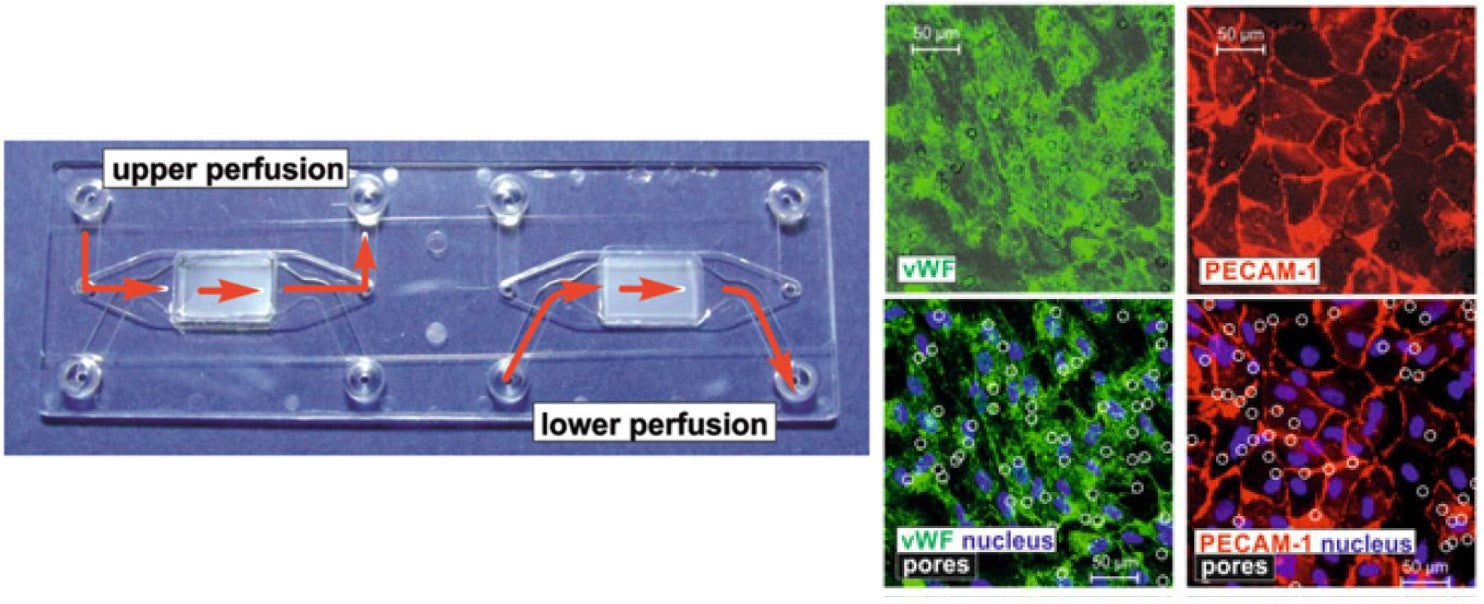
The authors investigated cell viability, expression of endothelial markers, and cell adhesion molecules of ECs dynamically cultured under low and high shear stress. This chip allows an effective supply with nutrition medium, discharge of catabolic cell metabolites, and defined application of shear stress to ECs under laminar flow conditions.
They show that ECs cultured in the chip form a tight EC monolayer with increased cellular density and enhanced cell layer thickness compared to static and two-dimensionally perfused cell culture conditions. Endothelial layers in the chip express higher amounts of EC marker proteins von-Willebrand-factor and PECAM-1.
Liver-on-chip
Rennert K. et al., A microfluidically perfused three dimensional human liver model, Biomaterials 2015, 119-131 (Download)
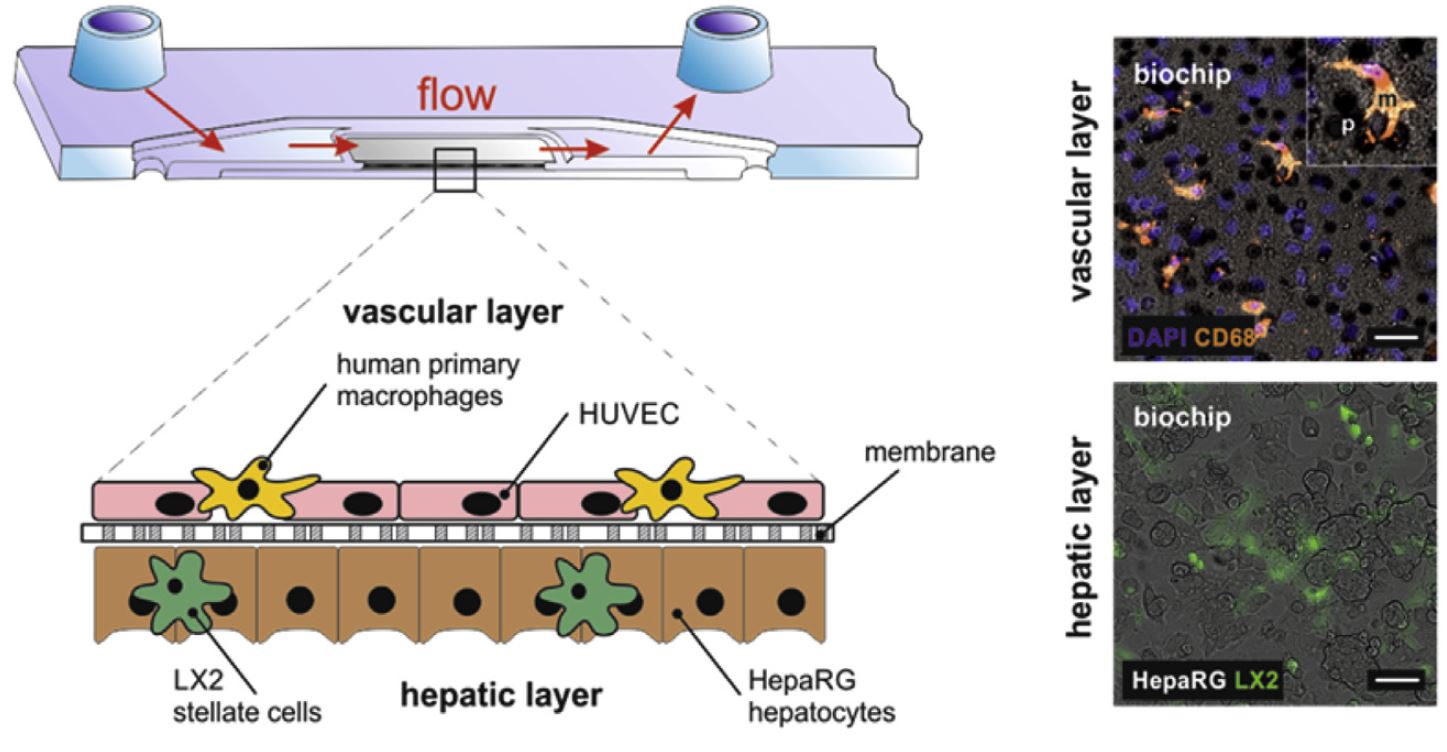
The microfluidically perfused chip enables sufficient nutrition supply and resembles morphological aspects of the human liver sinusoid. It utilizes a suspended membrane as a cell substrate mimicking the space of Disse and the perfusion enhances the formation of hepatocyte microvilli. The authors stated that the perfused liver chip shares relevant morphological and functional characteristics with the human liver and represents a new in vitro research tool to study human hepatocellular physiology at the cellular level under conditions close to the physiological situation.
During culture in the biochip HepaRG cells consistently differentiate into cells exhibiting a hepatocyte phenotype and into cells with biliary epithelial cell phenotype that self-organize into a hepatocyte layer with functional bile ducts.
Content
1x Cross-Flow Membrane Chip - With Luer and Mini Luer interfaces Fluidic 568
Specifications
| SKU |
CS-10001200 |
CS-10001201 |
CS-10001202 |
CS-10001203 |
| Design element |
Membrane |
| Material |
Topas |
PS |
| Material chip body |
Mcs-COC 13 |
mcs-PS 17 |
| Material chip lid |
mcs-foil 011 (Topas; 140 µm; Tg 78°C) |
mcs-foil 075 (PS; 125 µm) |
| Color |
Transparent |
| Interface type |
Luer + Mini Luer interface |
| Surface treatment |
Not treated |
Hydrophilized |
Not treated |
Hydrophilized |
| Membrane |
mcs-membrane 120 (8 µm pores; PET; transparent) |
Documentation
Click to read more information about ChipShop chips material properties.
? Organ-on-a-Chip - Cross-flow membrane - Luer and Mini Luer - Fluidic 568 datasheet
? General handling guide for cross-flow membrane chips (available soon)
Maurer, M., Gresnigt, M. S., Last, A., Wollny, T., Berlinghof, F., Pospich, R., ... & Mosig, A. S. (2019). A three-dimensional immunocompetent intestine-on-chip model as in vitro platform for functional and microbial interaction studies. Biomaterials,220, 119396. https://doi.org/10.1016/j.biomaterials.2019.119396
Raasch, M., Rennert, K., Jahn, T., Peters, S., Henkel, T., Huber, O., ... & Mosig, A. (2015). Microfluidically supported biochip design for culture of endothelial cell layers with improved perfusion conditions. Biofabrication, 7(1), 015013. doi:10.1088/1758-5090/7/1/015013
Rennert, K., Steinborn, S., Gröger, M., Ungerböck, B., Jank, A. M., Ehgartner, J., Nietzsche, S., Dinger, J., Kiehntopf, M., Funke, H., Peters, F. T., Lupp, A., Gärtner, C., Mayr, T., Bauer, M., Huber, O., & Mosig, A. S. (2015). A microfluidically perfused three dimensional human liver model. Biomaterials, 71, 119–131. https://doi.org/10.1016/j.biomaterials.2015.08.043