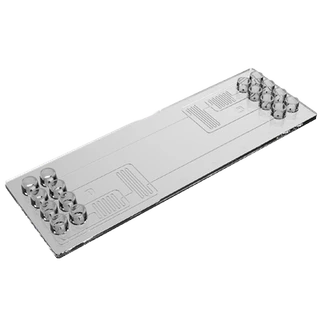
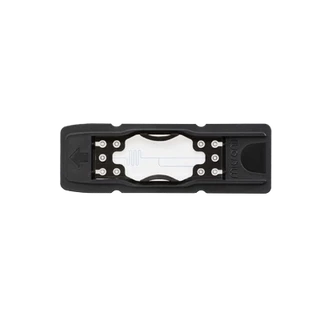
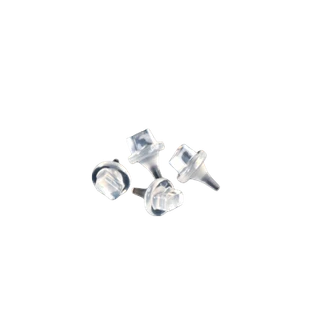
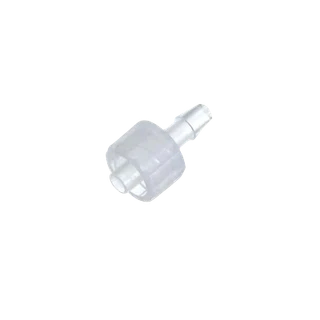
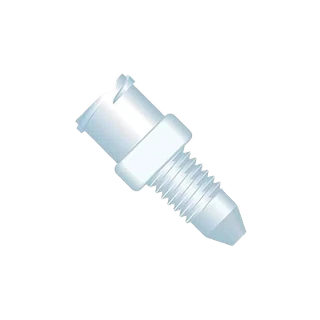
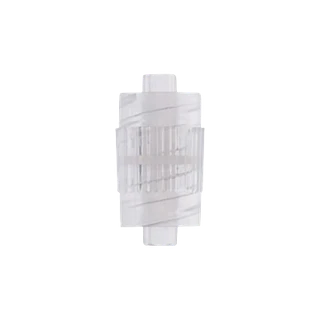
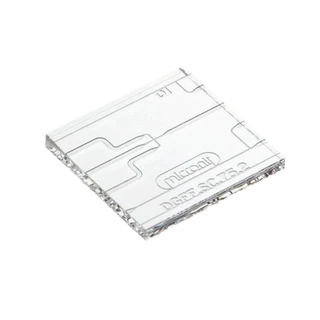
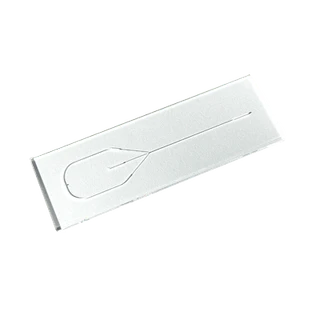
The Cross-Flow Membrane Chip - Multi-Organ-on-Chip Fluidic 747 is a microfluidic chip designed for advanced cell culture experiments and multi-organ interactions. Its key specifications include a dual-chamber volume configuration with volume selection enabled by two permeable membranes, and a design supporting interaction through two inter-connected channels. This setup allows precise control of co-cultures, supports a large upper chamber, and separates two bottom chambers by membranes for flexible experimental planning. The number of available independent channels enhances utility in complex biological assays.
General
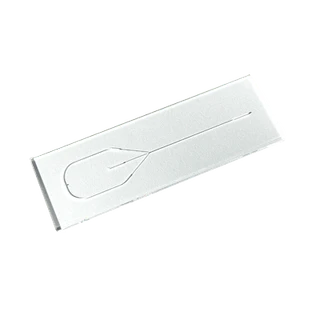
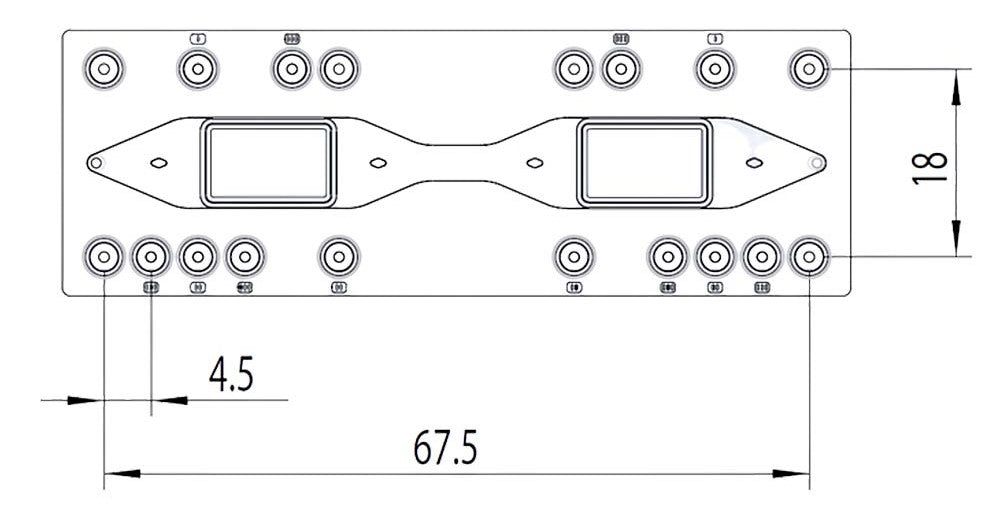
The cross-flow membrane chip Fluidic 747, equipped with Mini Luer interfaces, has two inter-connected chambers that interact through two permeable membranes. Each chamber includes one inlet and one outlet. A notable feature of this chip is the large upper chamber spanning over both membranes. In contrast, each membrane separates the upper chamber from two distinct bottom chambers. The chip is available with different membrane types, varying in characteristics such as pore size. Fluidic 747 can be utilized, for instance, in cell culture experiments, where cells, such as epithelial cells, are co-cultured. The two membrane units enable multiorgan settings as well.
Features & Benefits
- Flexible Chamber Design: The chip features a dual-chamber arrangement with a large upper chamber and two separated lower chambers, enabling a range of co-culture and interaction studies for advanced biological models.
- Selectable Membranes: Choice of different membrane types and pore sizes supports applications needing various cell interactions and barrier properties.
- Mini Luer Interface: The standardized interface ensures simple fluid connections and integration with existing lab equipment, improving handling and scaling.
- Surface Treatment Options: Hydrophilized and non-treated variants are available to support different cell culture requirements.
- Transparent Materials: Chips are made with transparent polymers, allowing direct visual inspection and in situ microscopy during experiments.
The Fluidic 747 cross-flow membrane chip offers a versatile solution for cell culture and organ-on-chip research. With customizable membrane types and surface treatments, users can adapt experimental setups for specific cell models and permeability requirements. The chip's design supports complex co-culture and dynamic fluidic simulation environments.
Its ease of integration using Mini Luer connectors and high optical clarity makes it ideal for laboratories focused on microphysiological systems, pharmaceutical research, and advanced tissue engineering. The dual-chamber structure and independent control points allow users to set up isolated or interacting compartments for multi-tissue studies.
Applications
The product is best suited for:
- Cell co-culture assays
- Multi-organ-on-chip modeling
- Permeability and barrier function studies
- Pharmaceutical research
- Microphysiological system development
Content
1x Cross-Flow Membrane Chip - Multi-Organ-on-Chip Fluidic 747
Specifications
| SKU | CS-10001559 | CS-10001018 | CS-10001021 | CS-10001020 | CS-10001558 | CS-10001557 | CS-10001560 |
| Design element | Chamber; Membrane | Chamber; Membrane | Chamber; Membrane | Chamber; Membrane | Chamber; Membrane | Chamber; Membrane | Chamber; Membrane |
| Material | Topas | Topas | PS | Topas | PS | Topas | PS |
| Material chip body | Mcs-COC 13 | Mcs-COC 13 | mcs-PS 17 | Mcs-COC 13 | mcs-PS 17 | Mcs-COC 13 | mcs-PS 17 |
| Material chip lid | mcs-foil 011 (Topas; 140 µm; Tg 78°C) | mcs-foil 011 (Topas; 140 µm; Tg 78°C) | mcs-foil 075 (PS; 125 µm) | mcs-foil 011 (Topas; 140 µm; Tg 78°C) | mcs-foil 075 (PS; 125 µm) | mcs-foil 011 (Topas; 140 µm; Tg 78°C) | mcs-foil 075 (PS; 125 µm) |
| Color | Transparent | Transparent | Transparent | Transparent | Transparent | Transparent | Transparent |
| Interface type | Mini Luer interface | Mini Luer interface | Mini Luer interface | Mini Luer interface | Mini Luer interface | Mini Luer interface | Mini Luer interface |
| Surface treatment | Hydrophilized | Not treated | Hydrophilized | Hydrophilized | Not treated | Not treated | Hydrophilized |
| Membrane | mcs-membrane 132 (0.4 µm pores; transparent) | mcs-membrane 120 (8 µm pores; PET; transparent) | mcs-membrane 120 (8 µm pores; PET; transparent) | mcs-membrane 120 (8 µm pores; PET; transparent) | mcs-membrane 132 (0.4 µm pores; transparent) | mcs-membrane 132 (0.4 µm pores; transparent) | mcs-membrane 132 (0.4 µm pores; transparent) |
Documentation
Click to read more information about ChipShop chips material properties.
? General handling guide for cross-flow membrane chips (available soon)
? Cross-flow membrane chip with chamber interaction Fluidic 747 datasheet
Maurer, M., Gresnigt, M. S., Last, A., Wollny, T., Berlinghof, F., Pospich, R., ... & Mosig, A. S. (2019). A three-dimensional immunocompetent intestine-on-chip model as in vitro platform for functional and microbial interaction studies. Biomaterials,220, 119396. https://doi.org/10.1016/j.biomaterials.2019.119396
Raasch, M., Rennert, K., Jahn, T., Peters, S., Henkel, T., Huber, O., ... & Mosig, A. (2015). Microfluidically supported biochip design for culture of endothelial cell layers with improved perfusion conditions. Biofabrication, 7(1), 015013. doi:10.1088/1758-5090/7/1/015013
Rennert, K., Steinborn, S., Gröger, M., Ungerböck, B., Jank, A. M., Ehgartner, J., Nietzsche, S., Dinger, J., Kiehntopf, M., Funke, H., Peters, F. T., Lupp, A., Gärtner, C., Mayr, T., Bauer, M., Huber, O., & Mosig, A. S. (2015). A microfluidically perfused three dimensional human liver model. Biomaterials, 71, 119–131. https://doi.org/10.1016/j.biomaterials.2015.08.043