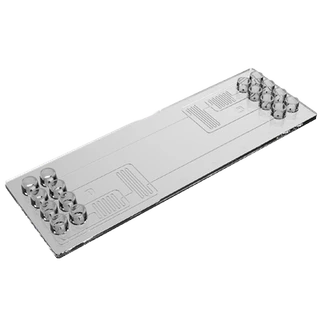
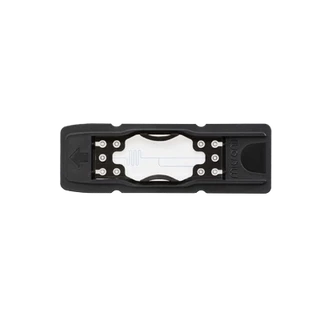
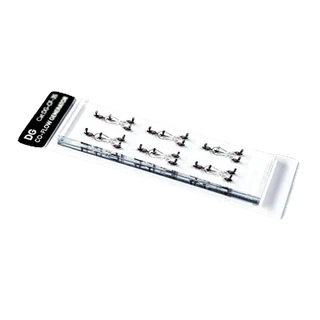
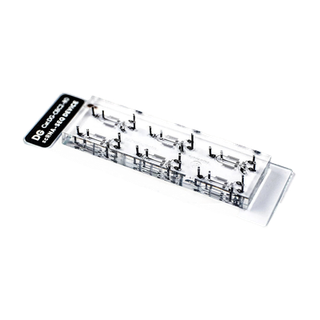
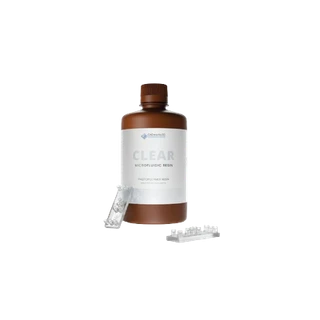
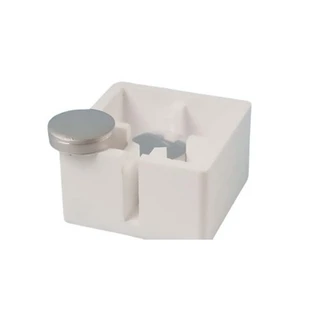
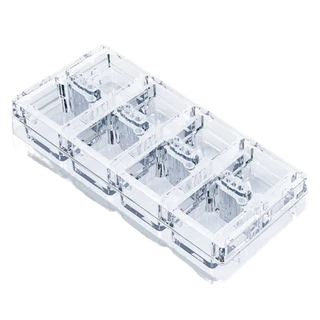
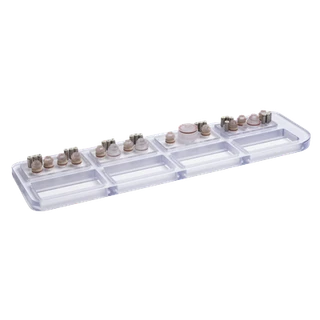
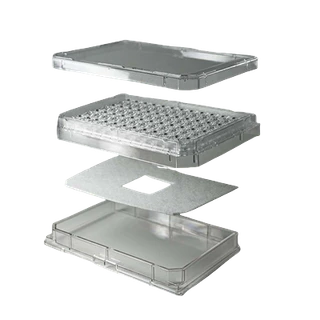
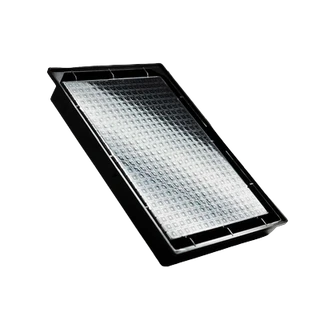
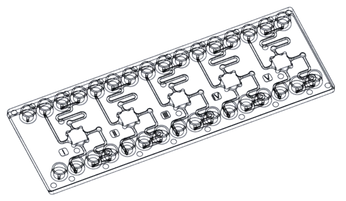
These bioceramic scaffolds provide a bone-like niche for in vitro studies such as disease modeling or drug screening. They are 3D printed and resemble native bone in terms of physical and structural properties. This easy plug-and-play solution exists in different formats to easily fit into your existing devices.
General
These 3D-printed scaffolds are xeno-free bioceramic scaffolds that highly resemble bone. Ideal to perform 3D cell culture and build more physiological models, they support the growth of cells into 3D structures.
The P3D scaffolds have high contents of β-tricalcium phosphate, display macro- and micro-porosities, and have a stiffness similar to native bone. These sterile ready-to-use scaffolds exist in different formats with diameters of 5, 12, 20 and 30 mm and can be easily integrated into existing devices. The use of ultra-low attachment plates is advised. They are compatible with most common laboratory techniques without requiring major protocol alterations.
Two different types of pattern exist: grid or gyroid depending on the study design and subsequent analyses. The grid pattern is recommended for traditional cell culturing and evaluation of cell proliferation, as bright-field microscopy is easier with the geometry. The gyroid pattern will provide a more organic organization of the macro-porous structures. With this geometry, bright-field microscopy is still possible but requires a longer time per sample.
Most traditional laboratory procedures are compatible with the scaffolds, such as: fluorescence microscopy, nucleic acid extraction, staining assays, scanning electronic microscopy, cell recovery by trypsinization, Western Blot, and many others.
As compared to 2D culture, the seeding density needs to be adapted to the larger surface area of the 3D model. The recommended seeding densities can be found below:
| Diameter |
Seeding density
|
| 5 mm (96-well format) |
30,000 cells |
| 12 mm (24-well format) |
350,000 cells |
| 20 mm (12-well format) |
500,000 cells |
| 30 mm (6-well format) |
1,000,000 cells |
These recommendations allow the cells to reach confluency at the same rate as what is observed in 2D.
It is also possible to create customized scaffolds in size and shape to fit your research question.
Content
The scaffolds come in different packaging depending on their size and compatibility with established well plates.
- for the 5 mm diameter: packs of 48 or 96
- for the 12 mm diameter: pack of 24
- for the 20 mm diameter: pack of 12
- for the 30 mm diameter: pack of 6
Specifications
| Formulation |
Beta-tricalcium phosphate Cas Nr 7758-87-4 |
| Use |
3D cell culture
|
| Operation |
Ready to use at room temperature
|
| Biocompatibility |
Biocompatible, approved for animal studies
|
| Cell harvesting |
Usual techniques
|
| Storage |
Store dry at room temperature |
| Plate compatibility |
Compatible with most common plate types. Ultra-low attachment plates are advised. |
| Standard pore size |
- Porosity 1: 300-400 µm
- Porosity 2: 600-800 µm
|
| Design |
Grid or Gyroid |
Documentation
?Ossiform P3D - Technical Data Sheet
?Ossiform P3D - Safety Data Sheet
?Ossiform P3D - Frequently Asked Questions
?Ossiform P3D - Research Resource Handbook
Protocols for classic laboratory techniques involving P3D scaffolds are available on demand.